

Kilmar Abrego García, a Maryland construction worker and father of three, remains imprisoned in El Salvador after being wrongfully deported by U.S. officials for believed involvement in MS-13. Despite a prior court order prohibiting his removal, Abrego García was deported in March to CECOT, El Salvador’s notorious maximum-security facility for gang members and suspected terrorists. The government has since announced this move to be an “administrative error”.
Abrego Garcia’s lawyers argue the MS-13 allegations against him are based largely on an accusation from a confidential informant who claimed he was a member of the gang in New York, even though he has never lived there. In light of this, the Supreme Court has voted to uphold a lower court’s order demanding that the Department of Homeland Security takes ‘all available steps’ to return him.
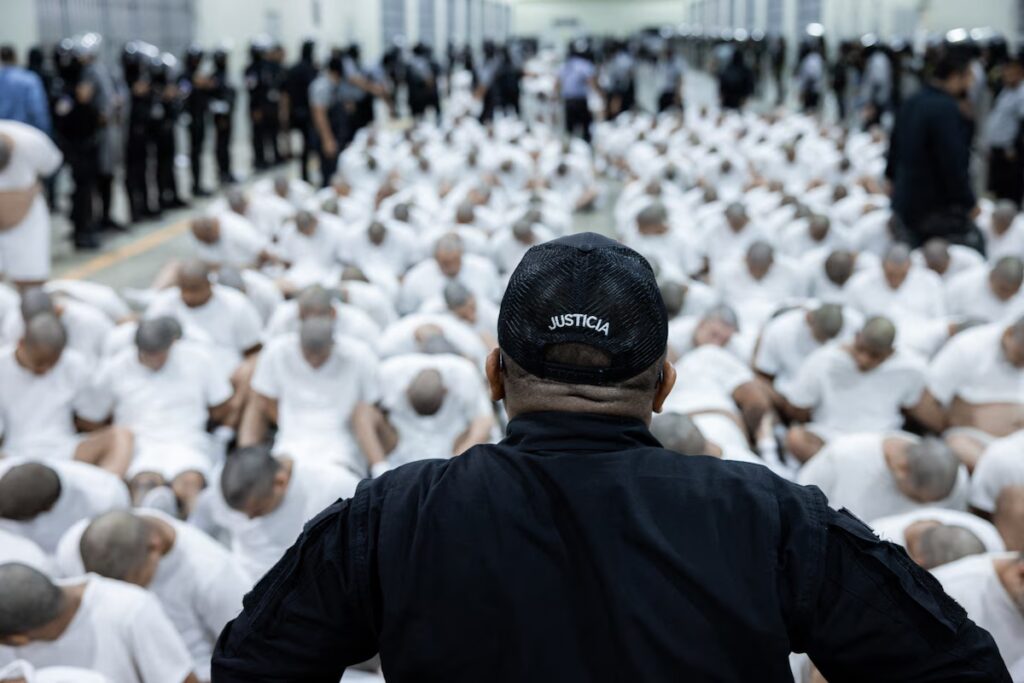
Justice Blocked by Politics
U.S. District Judge Paula Xinis has consistently ruled that the government’s deportation of Abrego García was “wholly unlawful” and asserts he was arrested and removed without due process. In violation of both federal law and an immigration court order granting him withholding of removal, Abrego García may now be subject to the dangerous conditions the prior court order was protecting him from.
The immigration court granted Abrego García withholding of removal after determining he would likely face persecution if returned to El Salvador, where widespread gang violence threatened his safety. Despite that protection, the Trump administration’s legal team, now led by Solicitor General D. John Sauer, argues that facilitating his return would intrude on the president’s authority over foreign policy.
Trump administration officials also claim the U.S. has limited power now that Abrego García is in Salvadoran custody and have suggested El Salvador may have its own legal basis for holding him, despite having no charges in either country. The Supreme Court’s ruling leaves Judge Xinis’ order in place and requires the administration to “facilitate” his release and restore the bypassed legal process.

Justice Denied, Rights Ignored
This case exposes the volatile fault line in U.S. immigration enforcement, where rapid deportation initiatives clash with legal safeguards designed to protect individuals from wrongful removal. Abrego García’s deportation, occurring in violation of a court order and founded upon unsubstantiated gang allegations, calls for concern about the future of procedural integrity.
Civil rights and immigrant advocacy groups view this case as a dangerous precedent. If someone lawfully present in the U.S., with court protection, can be deported and imprisoned abroad without recourse, due process in immigration law can be compared to an easily broken paper promise.
“This is about more than one man,” said Abrego García’s attorney in a recent filing. “It’s about whether the government can detain, deport, and abandon a person—without consequence—when it violates the law.”

Three Clashing Perspectives
1. The Trump Administration:
The White House insists that this case exemplifies the limits of judicial authority in times of complex foreign diplomacy. In its emergency appeal to the Supreme Court, the Trump administration argued that Judge Xinis lacked the authority to issue the return order and that U.S. officials could not compel El Salvador to release Abrego García. The administration also raised national security concerns claiming that without direct evidence, Abrego García was connected to the MS-13 gang.
2. The Courts and Civil Rights Advocates:
Federal judges and civil rights lawyers argue that this case is a textbook example of unlawful government action. Judge Xinis and the 4th Circuit Court of Appeals have forcefully rejected the administration’s view that courts are powerless in such situations. “Unconscionable”, “Kafkaesque” and “wholly lawless” are just some of the phrases used in court opinions to describe the government’s actions. On April 10th, the majority conservative U.S. Supreme Court (with a 6-3 split), voted unanimously in a 9-0 ruling to uphold the lower court’s order to “facilitate” the return of Kilmar Abrego García.
3. The Public and Abrego García’s Family:
Supporters of Abrego García see his case as a glaring injustice of the failure of the immigration system to protect the vulnerable. Immigrant rights groups have rallied around his family to help shoulder the emotional burden of what they believe to be an instance of profound bureaucratic overreach. Meanwhile, García’s wife and three children—all U.S. citizens—wait in Maryland. His youngest son, who is 5 and autistic, was in the car with García when ICE officers detained him on March 12. The family of Kilmar Abrego García has not heard from him since he was sent to El Salvador.
As the Abrego García family waits in uncertainty, his case raises the core question: What happens when the government admits a mistake—but refuses to undo it?
Let us know your thoughts @VALLEYMag on X.
Related
U.S. Added to Human Rights Watchlist
Columbia University explained
U.S. Under Scrutiny For Treatment of Deportees





Hello there! This is kind of off topic but I need some help from an established blog. Is it very difficult to set up your own blog? I’m not very techincal but I can figure things out pretty fast. I’m thinking about making my own but I’m not sure where to start. Do you have any tips or suggestions? Many thanks
Some genuinely nice and useful information on this site, too I believe the design holds excellent features.
I like this site very much, Its a very nice office to read and receive info . “Philosophy is a battle against the bewitchment of our intelligence by means of language.” by Ludwig Wittgenstein.
It’s really a great and helpful piece of information. I’m satisfied that you just shared this helpful info with us. Please keep us up to date like this. Thank you for sharing.
I think this internet site holds some really great information for everyone. “He is able who thinks he is able.” by Buddha.
Just about all of what you state happens to be astonishingly appropriate and that makes me ponder the reason why I had not looked at this with this light before. Your article really did switch the light on for me personally as far as this particular issue goes. Nonetheless at this time there is actually one particular factor I am not necessarily too cozy with so while I try to reconcile that with the core idea of the point, permit me observe exactly what all the rest of your readers have to point out.Nicely done.
Your home is valueble for me. Thanks!…
I went over this site and I believe you have a lot of good info, saved to fav (:.