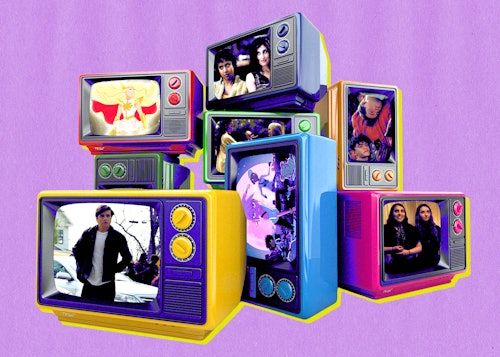
Everyone says they want more queer representation in media, calling for more diversity in our love stories, and to be fair we have been seeing it. Kind of. While audiences are quick to celebrate some queer narratives, others are still being met with hesitation, discomfort and just flat out avoidance. It’s become clear that not all representation is treated equally, and it’s getting harder to ignore who gets embraced and who gets sidelined.
The Comfort in Distance
There’s been a noticeable rise in popularity of media centered around men loving men (MLM) relationships. HBO’s “Heated Rivalry” being a perfect example of this. The show follows the love story between two hockey rivals and has already amassed over 600 million minutes streamed, making it one of HBO’s most watched scripted series. On the surface, this seems like progress, with queer stories being consumed, discussed and even celebrated. However, part of that comfort is because of its distance.
For many viewers, especially straight women, MLM relationships can feel “safe” for them to engage with because they exist outside their own lived experiences. These shows often portray relationships on a more level playing field that aren’t influenced by the traditional patriarchal gender roles, and have more of an emphasis on emotional longing and intimacy. This often allows women to enjoy the romantic aspects of the show more, without fear of the lead female character being objectified and portrayed in a stereotypical way.

The Shift
However, the same enthusiasm doesn’t always carry over to stories about women loving women (WLW). When sapphic relationships take the main spotlight, the reactions often shift to something of disinterest. It’s often framed as something that’s, “just not my thing,” or a matter of preference. But when that preference begins to follow a pattern, it can say something bigger.
A real time example of this, being the current backlash “Bridegerton” has been receiving after it was announced its next season would focus on a sapphic storyline. Many fans have gone online to express their disappointment and saying how the show should’ve “stuck to the original plot.” The contrast is hard to ignore. Seemingly MLM storylines are being celebrated and praised, while WLW centered plots are being opposed.
This selective engagement from audiences suggests an underlying discomfort with WLW representation in media. Unlike MLM stories, sapphic narratives can feel more personally reflective for some viewers. They challenge norms in a way that’s harder to keep at an arm’s length, and rather than being met with the same openness, they’re often pushed away.

Representation Isn’t Pick and Choose
If our goal is to support queer stories, that support can’t be conditional. Celebrating one form of representation while ignoring another doesn’t get us anywhere. All it does is just reinforce the existing biases in a different way. Media is able to shape what we view as “normal,” so when WLW stories are consistently being overlooked, it sends a message about whose experiences matter and whose don’t.
Just to be clear, this isn’t about forcing anyone to watch something they don’t enjoy. It’s about recognizing patterns in what we choose to engage with and asking why those patterns exist. Because when audiences loudly support some shows and not others, the industry notices and often impacts which stories continue to get told.

What’s your favorite show with queer representation? Tag us on Instagram @VALLEYMag to share!


Just what I was searching for. Concise, accurate, and no unnecessary fluff — rare these days. Appreciated.
Just what I was searching for. Concise, accurate, and no unnecessary fluff — rare these days. Appreciated.
Just what I was searching for. Concise, accurate, and no unnecessary fluff — rare these days. Appreciated.