
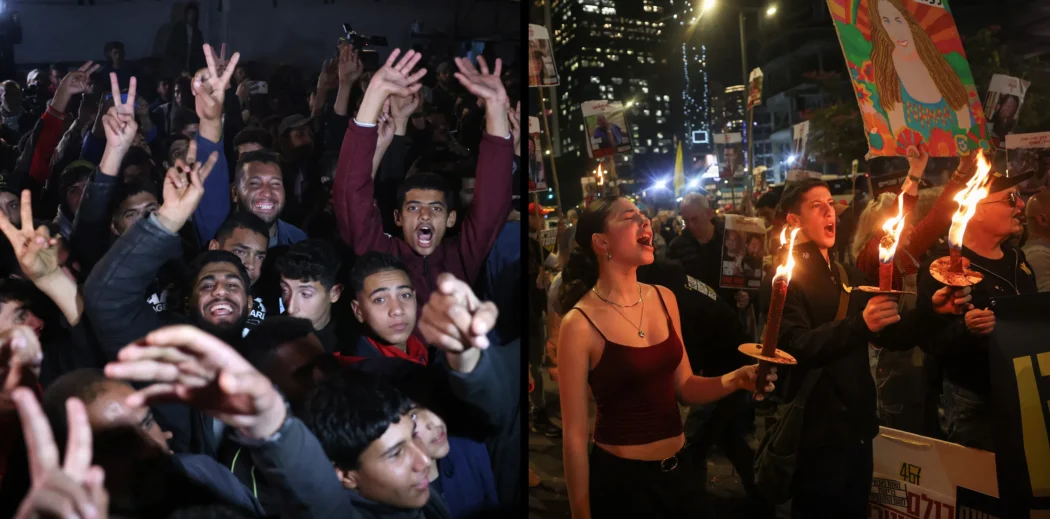
After 15 months of war – after the deaths of thousands, after the displacement of thousands – a ceasefire deal has been established in the Israel and Palestine conflict, mediated by the United States, Qatar and Egypt. If honored, this will put an end to the deadliest conflict in history between the two. Since the war began, the Israeli government has killed 46,000 Palestinians, mainly women and children. According to the Israeli Defense Forces (IDF), 405 soldiers have been killed since Oct., and 1200 Israelis died on Oct. 7.
On Jan. 19, the Israeli government approved of a ceasefire deal on the condition that Hamas, a Palestinian militant group, released the names of the first three Israeli captives to be released. The first six weeks – called the first phase – of the ceasefire will involve a prisoner exchange from both sides. Thirty-three Israeli captives – taken from the Oct. 7 hostage situation – will be released, and an estimated number of 1000 Palestinian captives will be released who were detained following Oct. 7.
Israel has agreed to withdraw its forces in parts of the Gaza territory. Palestians will also be able to leave the Gaza strip to receive treatment, opening the Rafah crossing into Egypt once again. Humanitarian aid is allowed to return back to the Gaza strip, and it has been reported that families have begun returning to their homes. The second and third phase of the ceasefire has yet to be negotiated and will be taking place during the first phase.
The full ceasefire deal has not yet been revealed, so there is a lot of uncertainty on what the future is going to look like in Israel and Palestine. As outlined in this article by Vox, this may not be a permanent end to a war, but rather a promise to pause the on-going war. The Israeli government will have six weeks to flesh out the details, and if they do not, then it leaves both sides on the edge of a very delicate line. The second phase is meant to put an official end to the war; it remains to be seen if this will be the case.
Prime Minister of Israel Benjamin Netanyahu will meet with Donald Trump on Feb. 4, likely to discuss the ceasefire. Trump has been under scrutiny and was refuted after suggesting that the Palestinian population should move into nearby countries Lebanon and Egypt. Trump has also promised to keep a strong relationship with Israel and continue sending military aid.
Hours after the announcement of the ceasefire deal, the IDF led a strike in the Gaza strip, killing dozens. Both sides are still incredibly strained with one another, so this deal is already touching a precarious situation. Though there has been support on both sides to the end of the war Israeli president Yitzhak Herzog said in a televised speech that he believes a complete ceasefire is the right choice. From a statement released by Hamas, they said this is a step toward Palestinian liberation. This war has displaced around 90% of the Palestinian population in Gaza. If nothing else, this ceasefire deal will provide some temporary relief to this brutal war that has resulted in tremendous loss and bloodshed.
Let VALLEY know your thoughts via Instagram @VALLEYmag!
Related
Assad Regime Topples in Syria
Death of Hamas Leader Yahya Sinwar
The Sahara Flooded




Can I just say what a relief to find someone who actually knows what theyre talking about on the internet. You definitely know how to bring an issue to light and make it important. More people need to read this and understand this side of the story. I cant believe youre not more popular because you definitely have the gift.
Generally I don’t read post on blogs, but I wish to say that this write-up very forced me to try and do it! Your writing style has been surprised me. Thanks, very nice article.
Hi, i think that i saw you visited my blog thus i came to “return the favor”.I’m attempting to find things to enhance my web site!I suppose its ok to use a few of your ideas!!
I like this web site because so much utile material on here :D.