
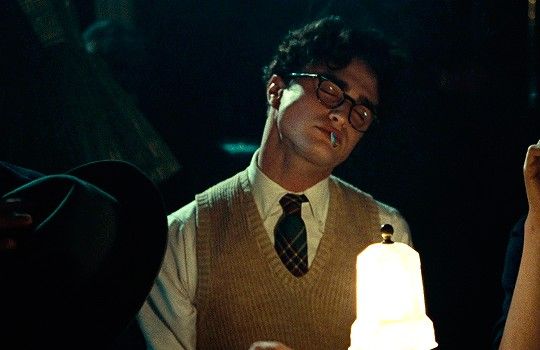
You know when you’re watching a movie or TV show and somewhere along the lines you find yourself thinking — I’ve seen this one before? You’re sure you actually haven’t, but there’s just something about it that feels so familiar; that feels like it’s been done before. More likely than not, this is because the beloved actor you watched this for has probably been in something similar, playing a similar role or acting similarly to how they are now. In the rabbit hole that is Hollywood, this is usually known as typecasting.
What Is Typecasting?
Generally speaking, it’s a term used in the entertainment industry, but particularly in acting, to describe the process of repeatedly casting an actor in similar roles based on their previous performances or a certain image they have portrayed. This can be due to the actor’s physical appearance, personality traits, or the success of a particular character they have played in the past.
Normally, once an actor has fallen into the throes of being typecast, it’s considered nearly impossible to break out of something like that. Breaking free from typecasting is considered a significant achievement in an actor’s career, as it allows them to showcase their versatility and range, taking on a variety of roles and genres to avoid being confined to a single stereotype. So … who’s actually been able to achieve something like that and who remains stuck where they began?
Broken Out of the Mold
Actors who are able to break out of being typecasted must not only be taking on different, multifaceted roles but also need to excel at playing them. A prime example of a seasoned actor who does this consistently by removing herself from ever being typecasted is Viola Davis, who showcases her exceptional versatility through a rich tapestry of performances.
Renowned for her dramatic intensity, she brought profound emotional depth to characters like Aibileen Clark in “The Help,” capturing the complexities of the Civil Rights era. In “Doubt,” Davis demonstrated her ability to navigate morally ambiguous roles with intricate characterization. Her television role as Annalise Keating in “How to Get Away with Murder” has also further highlighted her mastery, portraying a brilliant and complicated law professor.

Another actor who is exemplary of the traits needed to avoid typecasting is Bryan Cranston. Known for his groundbreaking role as Walter White in “Breaking Bad,” Cranston managed to avoid being pigeonholed into the role of a high school chemistry teacher turned methamphetamine manufacturer.
The actor’s deliberate choices, such as taking on comedic roles in “Malcolm in the Middle” and more recently in “The Upside,” showcase his ability to break away from the constraints of a singular character.
Laying the Groundwork
In recent times, an actor who has been praised for entirely having avoided being cast in the same type of role over and over is Jacob Elordi. His breakout role, although debatably so, was playing a lead in Netflix’s “Kissing Booth” and its subsequent sequels. However, many people talk about that role as one where Elordi is unrecognizable, instead citing his now iconic role in “Euphoria” as the one which they know him from.
Most recently, Elordi starred in Sofia Coppola’s “Priscilla” as Elvis himself, leading to audiences accepting him as a big-name actor with credit as well as acting skills to back him up.
The (Ex) Fantasy Leading Men
Imagine being around eleven years old, deciding to try being a child actor for a while and auditioning for a BBC drama show. A couple of months pass, and before you know it, you’re the titular character of one of the world’s most successful franchises that has and may ever exist. And then it’s over. What do you do then? How do you continue your career without forever being known as “The Boy Who Lived?”
Well, if you do what the boy in question, Daniel Radcliffe did, you just … do whatever you want. Sure, they’ll always see you as the kid with glasses and a scar on your head but you now have the freedom to experiment, to dabble in areas of film you never were able to before. From playing a criminal to a dead body for the entire film, he has managed to evade accusations of both typecasting as well as breaking away from typecasting at the same time, making him a truly unique case.

On the other hand, Twilight’s resident heartthrob, Robert Pattinson has managed to go from a brooding, sparkly, (somewhat) romantic vampire to quite literally … Batman. Over time, Pattinson has strategically chosen roles that challenge traditional expectations. His performances in films like “Good Time” and “The Lighthouse” have showcased a depth and versatility that defies the limitations of his earlier heartthrob image. However, the final pin on the board was his version of the classic superhero that completely exceeded expectations and has now set the stage for his future career.
The Anatomy of Typecasting
Now that we’ve laid the groundwork for what it takes and what kind of actors break out of the reins of typecasting, we must dissect what really contributes to an actor’s success or struggle and their relationship with typecasting.
Actors who strategically choose roles that challenge the perception of their previous characters are often more successful in escaping typecasting. The entertainment industry’s ever-shifting landscape and audience preferences play a significant role. Moreover, those who align themselves with emerging trends or take calculated risks during industry shifts may find it easier to break free. An actor’s personal life and public image can also impact their ability to break free from typecasting — public controversies or intense media scrutiny might end up overshadowing an actor’s efforts to diversify their roles.
What are your thoughts on actors being typecasted? Let us know by tagging us @VALLEYmag on Instagram or Twitter!






F*ckin’ awesome issues here. I’m very happy to peer your post. Thanks so much and i’m having a look forward to touch you. Will you please drop me a e-mail?
Hi my friend! I wish to say that this post is amazing, nice written and include almost all significant infos. I would like to see more posts like this.
I wish to express my admiration for your kindness for those people who have the need for help with this niche. Your very own commitment to getting the message up and down had become extraordinarily effective and has constantly permitted somebody much like me to achieve their aims. Your entire valuable guide means a great deal to me and additionally to my fellow workers. Thanks a lot; from all of us.
Some really wonderful work on behalf of the owner of this website , utterly outstanding content material.
I think this site contains some real good info for everyone :D.
Only wanna comment on few general things, The website layout is perfect, the content material is very good. “By following the concept of ‘one country, two systems,’ you don’t swallow me up nor I you.” by Deng Xiaoping.
I truly wanted to write down a small message in order to thank you for some of the unique techniques you are placing here. My time intensive internet look up has now been rewarded with good ideas to write about with my close friends. I ‘d suppose that many of us visitors actually are very lucky to dwell in a useful community with very many wonderful individuals with beneficial techniques. I feel quite lucky to have encountered the webpage and look forward to many more brilliant moments reading here. Thank you once more for all the details.
Hey, you used to write great, but the last few posts have been kinda boring?K I miss your great writings. Past several posts are just a little bit out of track! come on!
I appreciate, cause I found exactly what I was looking for. You have ended my 4 day long hunt! God Bless you man. Have a great day. Bye