
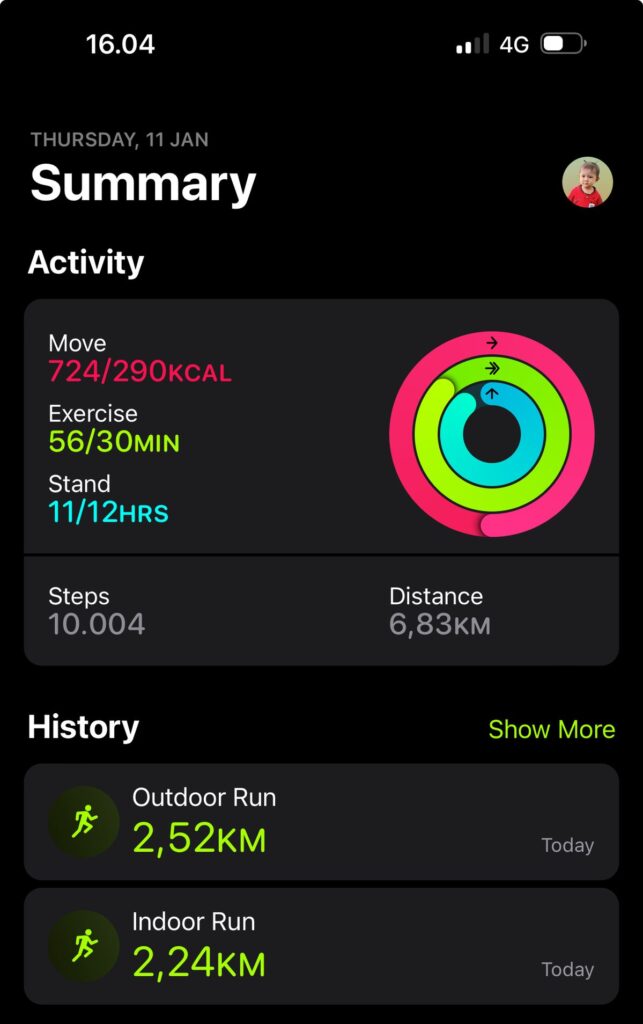
We’ve learned to trust numbers more than ourselves. If the app says we slept well, we convince ourselves we’re rested, even if we wake up exhausted. If we hit 10,000 steps, it counts as a “good day,” regardless of how we felt getting there.
Somewhere along the way, intuition took a backseat. Instead of asking “Do I feel okay?” we ask “Did I hit my goals?“
When the answer is no, the guilt creeps in. Not because we’ve failed ourselves emotionally, but because we’ve fallen short numerically.
The Aesthetic of Control
There’s something undeniably satisfying about a perfectly filled-in habit tracker. Rows of green checkmarks, color-coded calendars, step counts, sleep scores. On the surface, it feels like control, almost like we’ve cracked the code to becoming our best selves. Every sip of water logged, every workout recorded, every hour accounted for.
But beneath the curated aesthetic of productivity, there’s a thought that remains in the back of our mind: How are we really feeling? Because on paper, we are the healthiest people in the world. But mentally, we’re missing the idea of happiness.
Rest starts to feel unproductive. Slowing down feels like falling behind. Suddenly, the tools meant to help us feel better start doing the opposite.

When Better, Feels Worse
Ironically, the more we track, the easier it becomes to feel like we’re not doing enough. There’s always another metric to improve and another version of ourselves to chase.
What if we stopped tracking for a second? Not forever—but long enough to check in without a screen.
What if a “good day” was defined by how present you felt, not how productive you were? What if listening to your body mattered more than optimizing it?
While tracking can show us patterns, it can’t tell us how we actually feel. That part is still ours to figure out:
Messy, unmeasured and real.

The Balance
Maybe it’s not about abandoning tracking altogether, but redefining its role. Let it guide you, not grade you. Let it inform you, not define you.
It also looks like knowing when to opt out. Not every moment needs to be documented, optimized or improved. Some mornings are meant to be slow without explanation. Some workouts don’t need to be recorded to “count.” Some days are allowed to exist without proof.
Keep the trackers, if they help. Close the rings if it feels good, but leave room for the untracked moments too, the ones that don’t show up in charts but stay with you anyway.
At the end of the day, you are more than your stats, and no app, no matter how advanced, can quantify what it means to truly feel okay.
Take a day to yourself, and track nothing. Let @VALLEYmag know how it went on Instagram!




Thanks for putting this together. The practical details were clear and useful, especially for readers comparing different options and planning their next steps. Ref rc27gc.
Pure brilliance today
Love this post so much
This moves hearts