
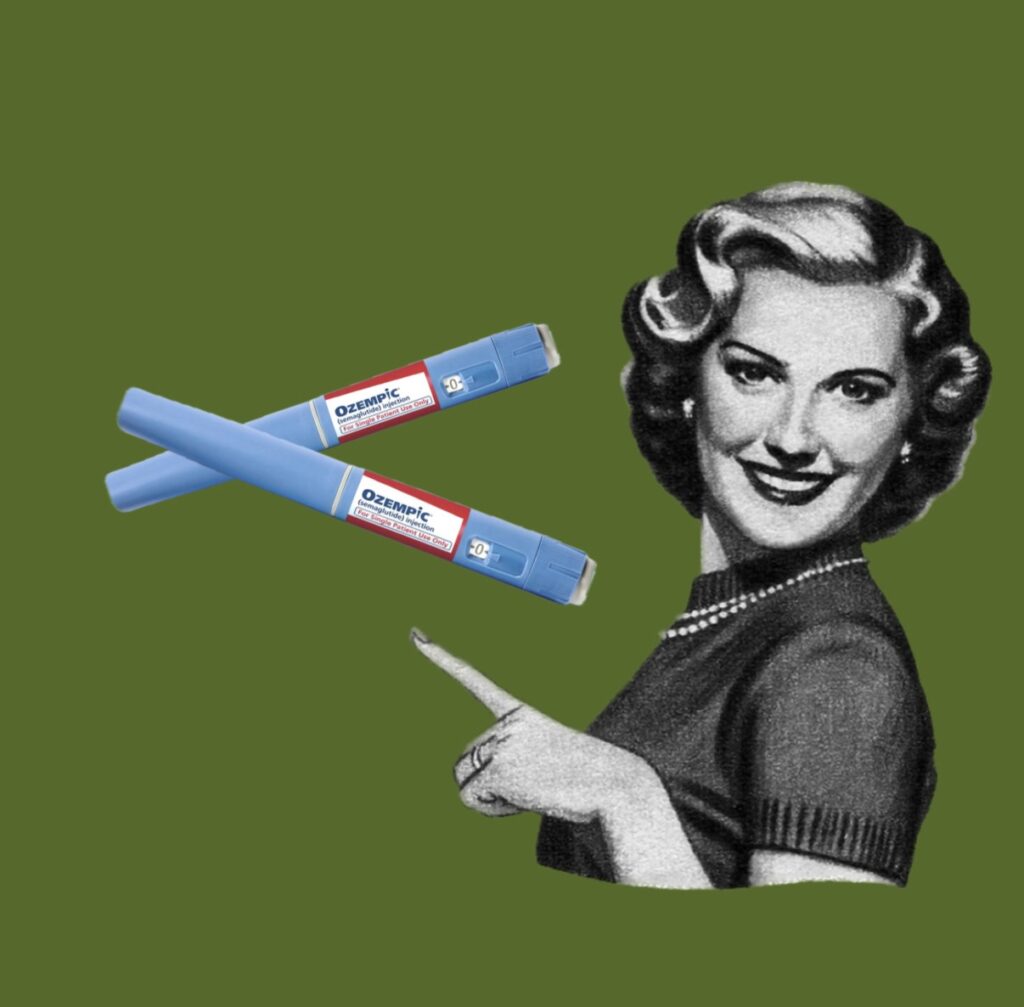
At this point, it’s pretty safe to say that most people with internet and social media access have heard of GLP-1s and their rapid success in weight loss. What started as a medical treatment has become a cultural phenomenon, pulling attention away from health and toward appearance. Due to their growing accessibility, these drugs have taken the public by a chokehold, reshaping how bodies are discussed and valued.
From Medicine to a Cultural Phenomenon
The focus is no longer on improved health outcomes, but on the social currency of thinness and the promise of what most people online refer to as “skinny privilege.”
Glucagon-like peptide-1 receptor agonists, commonly referred to as GLP-1s, include medications such as semaglutide, marketed under the brand names Ozempic and Wegovy, as well as tirzepatide, sold as Mounjaro. Originally developed as a treatment for Type 2 diabetes and obesity, these drugs have shifted public discourse away from their medical purpose and toward their ability to produce thin bodies.
Concerns About Use and Accessibility
One growing concern is the escalating use of GLP-1s among individuals whose weights fall within healthy ranges. The rise of online pharmacies and telehealth services has made the drugs easier to obtain, though not all sources are legitimate or regulated. Studies show that nearly half of the online pharmacies offering semaglutides generated by search engines belonged to illegal pharmacy operations.

Cultural Impact
As access expands, so do questions about the cultural impact. How does the normalization of pharmaceutical weight loss affect eating disorder culture and body dysmorphia? What happens when those who are already thin become thinner and that transformation is celebrated in real time?
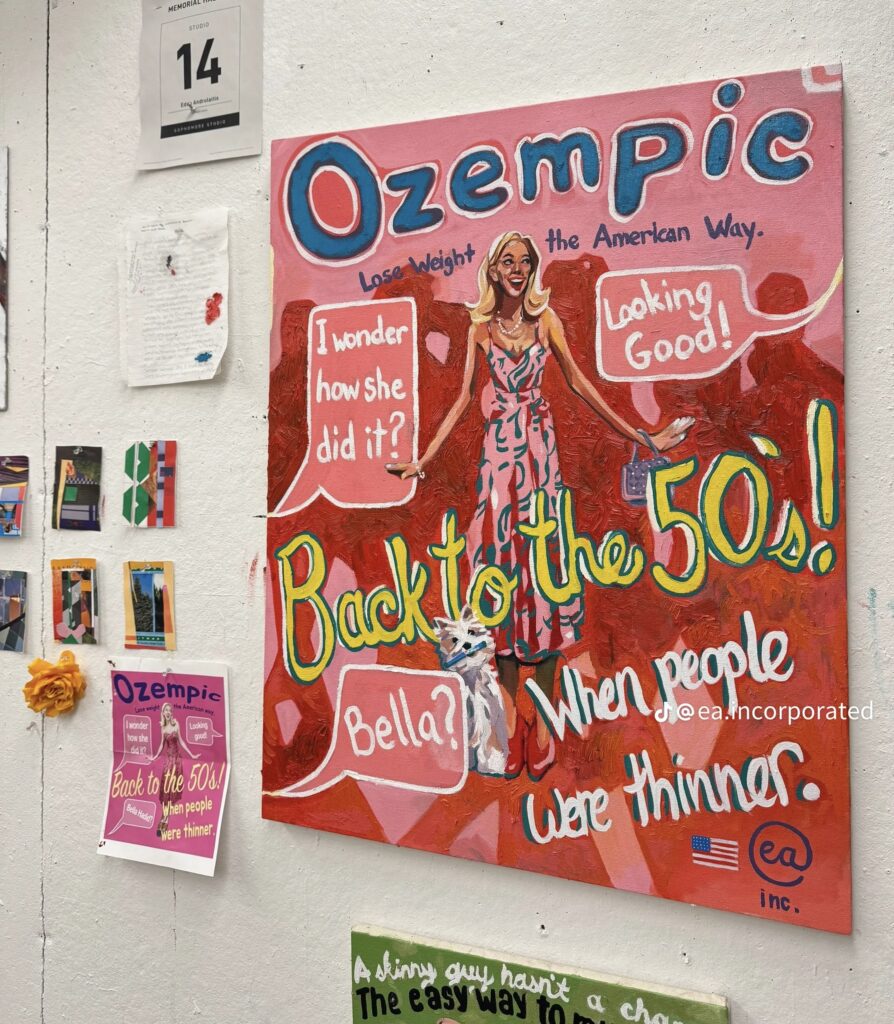
Celebrities everywhere are rapidly shrinking their frames to the point of public concern and we’re seeing a revival in the cultural obsession with thinness that was so heavily prevalent in the 1990s and early 2000s. If anyone with the financial means can swipe a card for a ‘miracle drug’ that promises to reshape their body, will the narrative around plus-sized people shift or will old stereotypes persist?
Historically, plus-sized bodies have been subjected to scrutiny and moral judgment, often framed as a lack of discipline or willpower, while thinness is praised without regard for actual health. Yet, with the introduction of these drugs accessible to anyone willing to pay, will they decouple body size from worthiness or will they raise the stakes of unattainable beauty standards even higher?
There is also the question of elitism. When a cost mediates access to thinness, those who can afford long-term treatment are celebrated, while others are left to bear the weight of outdated stereotypes. In a culture already so saturated with comparison, the consequences for body image and disordered eating remain difficult to ignore.
Where Will The Future Lead Us?
The future impact of GLP-1s is still unfolding. Some argue that these drugs could contribute to a shift toward body neutrality, in an effort against conformity and to reinstate the notion of size no longer being tied to morality or personal value. Others remain skeptical, pointing to diet culture’s long history of adapting rather than disappearing.
Currently, the internet appears split between two narratives on the subject. On one side is the body positivity movement. This advocates for acceptance across all body types. On the other is a rapidly evolving diet culture that has only lit a fire under the pressure to conform.
Diet culture and beauty standards are by no means new concepts; they have been ingrained in society and pushed upon women for generations. However, their evolution in the context of new technologies and medications such as GLP-1s brings into question the values and ideals held on a naturally unattainable standard.
As use of these drugs continues to rise, so does uncertainty. Will body shape and size continue to be categorically mistaken as an indication of morality? Or will long-term outcomes force a reckoning with the way health, worth and appearance are defined?
What are your thoughts on the rise of GLP-1s and their effects on body image? Let us know on Instagram @VALLEYmag!





Excellent web site. Plenty of useful info here. I’m sending it to a few buddies ans additionally sharing in delicious. And of course, thanks on your sweat!
Outstanding post, I believe people should learn a lot from this weblog its rattling user genial.