

More than 50 years after humans first set foot on the Moon during the Apollo 11 Moon Landing, NASA has returned with a new and more ambitious goal. The Artemis program is not just about revisiting the lunar surface — it is about building a long-term human presence there and redefining the future of space exploration. This mission is not only special because of our progress in space, but because of the social progress as well.
The Artemis program is made up of a series of missions designed to gradually push human exploration deeper into space. Artemis I, completed in 2022, was an uncrewed test flight that sent the Orion spacecraft around the Moon to ensure it could safely travel long distances and return to Earth. On April 10, Artemis II landed back on Earth after carrying a team of four astronauts around the Moon without landing. The trip lasted ten days, collecting data during the lunar flyby. Artemis III, currently planned for later this decade, is expected to land humans on the lunar surface for the first time since Apollo 17 in 1972.
Key to these missions is the Space Launch System, the most powerful rocket NASA has ever built. Alongside it, the Orion spacecraft is designed to support astronauts on deep-space missions, equipped with advanced life-support systems and the ability to travel farther than previous crewed spacecraft. NASA also plans to construct the Lunar Gateway, a space station that will orbit the Moon and serve as a staging point for future exploration.
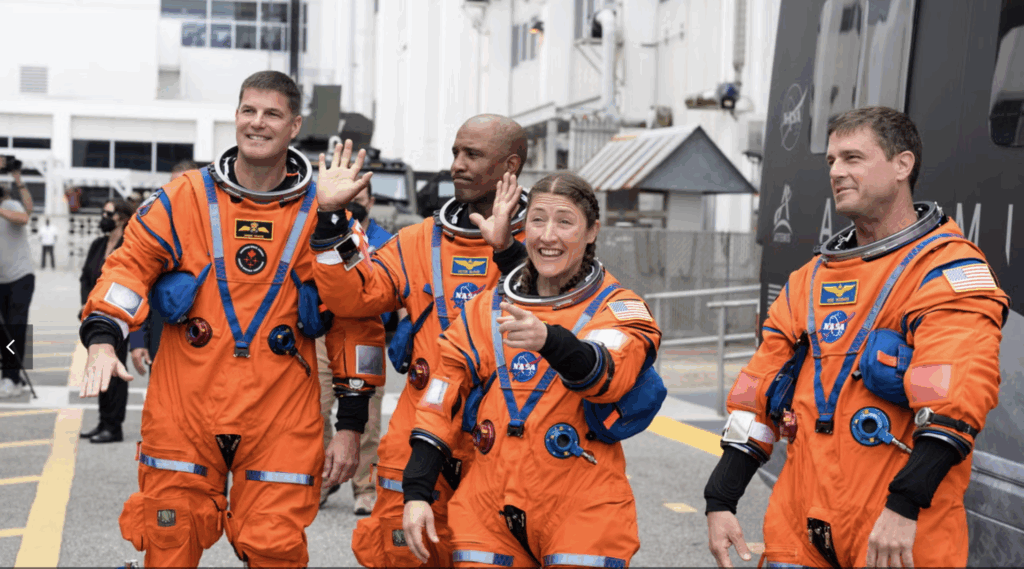
While the technological advancements of Artemis are impressive, what makes the program historically significant is its commitment to inclusion. NASA has explicitly stated that Artemis will land the first woman and the first person of color on the Moon. This marks a sharp contrast to the Apollo era, when all twelve astronauts who walked on the Moon were white men.
This shift reflects broader changes in both science and society. For decades, women were excluded from astronaut programs due to biased assumptions about physical ability and gender roles. It was not until 1983 that Sally Ride became the first American woman in space. Even then, progress was slow, and representation remained limited. While this event may seem small, it is a trailblazing moment in Space Exploration.
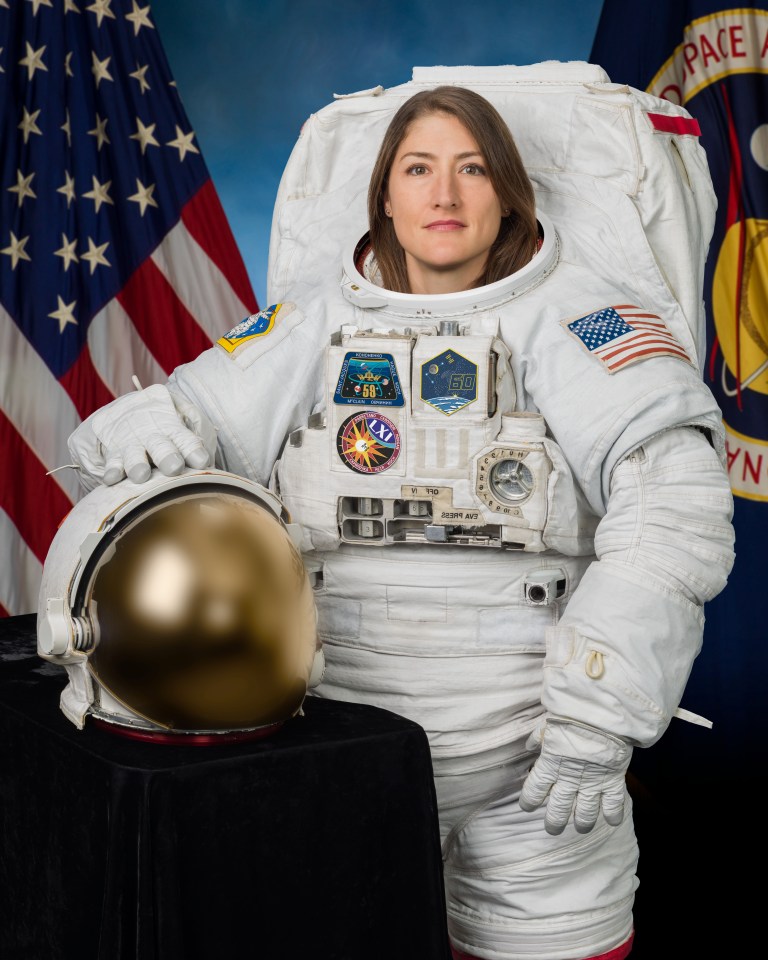
Astronauts like Christina Koch represent a turning point for women. Koch set a record for the longest single spaceflight by a woman, spending 328 days aboard the International Space Station. She also participated in the first all-female spacewalk, demonstrating not only technical expertise but also the importance of visibility. It’s individuals like Koch who set the standard for women in male-dominated fields and inspire millions of women around the world.
Ultimately, the goal of the Artemis program is to establish a sustainable and long-term human presence on the Moon and Mars by the end of the 2020s. This possibility itself is a huge advancement in science and space exploration, one that could affect all of us — regardless of race or gender. Landmark moments like Artemis are about progress in all shades — scientific, technological, and cultural. As NASA prepares to return to the Moon, it is also reshaping the narrative of space travel. The next era of exploration will not just revisit history; it will rewrite it, ensuring that the future of space includes everyone.
What are your thoughts on the Artemis mission? Let us know by tagging us @VALLEYMag on X!




Thankyou for this rattling post, I am glad I detected this internet site on yahoo.
You actually make it seem so easy together with your presentation however I find this topic to be actually something that I feel I’d never understand. It sort of feels too complicated and very wide for me. I’m taking a look forward for your subsequent put up, I will attempt to get the dangle of it!
Some truly superb information, Gladiola I noticed this.
Heya i’m for the first time here. I found this board and I find It really useful & it helped me out a lot. I hope to give something back and aid others like you aided me.
Almost all of what you state happens to be astonishingly legitimate and it makes me wonder the reason why I had not looked at this in this light before. This article really did turn the light on for me personally as far as this subject matter goes. Nevertheless at this time there is one particular factor I am not necessarily too comfortable with and while I attempt to reconcile that with the central idea of your issue, allow me see what the rest of the readers have to point out.Nicely done.
I have to express my thanks to the writer for bailing me out of such a predicament. After exploring through the the web and meeting basics that were not pleasant, I assumed my entire life was gone. Existing devoid of the strategies to the difficulties you’ve fixed as a result of your report is a crucial case, as well as the ones that might have in a negative way damaged my entire career if I had not encountered the blog. Your primary knowledge and kindness in touching everything was useful. I’m not sure what I would’ve done if I had not come across such a step like this. I am able to at this time look ahead to my future. Thanks for your time very much for your high quality and effective guide. I will not hesitate to recommend your site to anyone who would like care on this matter.
Definitely believe that which you said. Your favorite reason seemed to be on the web the simplest thing to be aware of. I say to you, I definitely get irked while people think about worries that they just don’t know about. You managed to hit the nail upon the top and defined out the whole thing without having side effect , people can take a signal. Will probably be back to get more. Thanks
Hello, i think that i saw you visited my weblog so i came to “return the favor”.I am trying to find things to improve my web site!I suppose its ok to use a few of your ideas!!
I like what you guys are up also. Such smart work and reporting! Keep up the superb works guys I’ve incorporated you guys to my blogroll. I think it will improve the value of my site 🙂