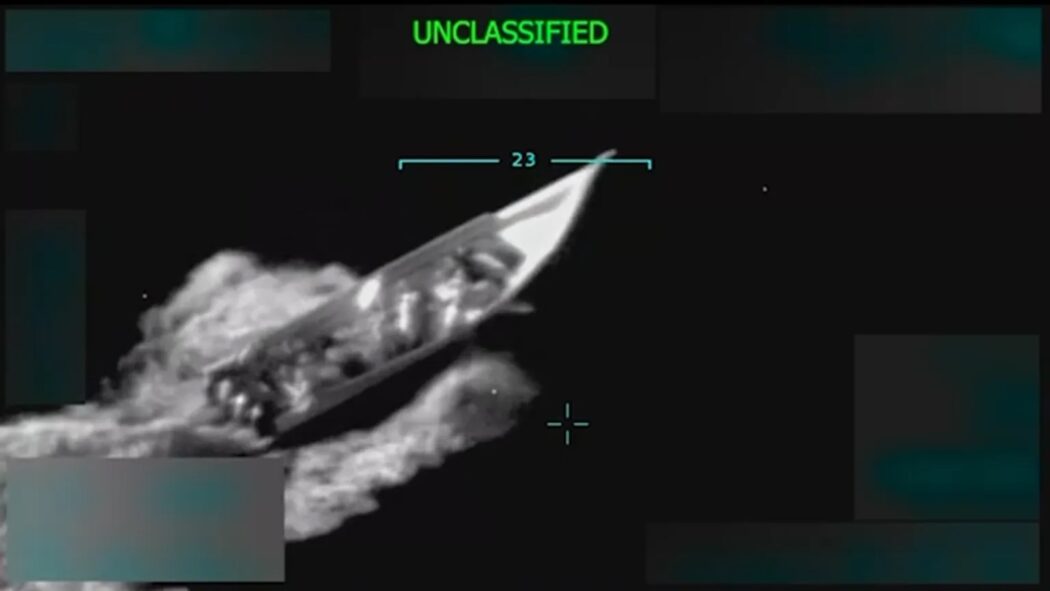
Since Sept. 2, the U.S. Navy has carried out 15 strikes against Venezuelan vessels off the Caribbean and Pacific coasts of the country. The strikes, which resulted in the death of 64 people total, targeted boats allegedly carrying illegal narcotics heading to the United States. The people killed are supposedly linked to the Tren de Aragua group, though the Venezuelan government denies this.
A Violation of International Law?
The strike took place in the Caribbean and Pacific coasts of Venezuela, posing no direct or immediate threat to the United States. While the Trump administration maintains the strike as completely within constitutional bounds, legal experts have called the act a violation of international law. For now, the administration’s claims on all strikes remain unclear: whether the people onboard were members of the Tren de Aragua, or whether the bags they possessed on the first boat actually carried drugs.
For his part, Secretary of Defense Pete Hegseth defended the decision:
We knew exactly who was in that boat. We know exactly what they were doing, and we knew exactly who they represented
Typically, the U.S. Coast Guard is in charge of interdictions. The first strike came without warning. Experts are calling it an act of war.
U.S.-Venezuela Relations
In an interview with CNN, Venezuelan foreign minister Yván Gil told reporters that Venezuela was not seeking to enter a conflict with the United States. The statement came after rising tensions between the two countries. This past August, President Nicolás Maduro mobilized the militia following U.S. Navy warship deployments to the Caribbean Sea.
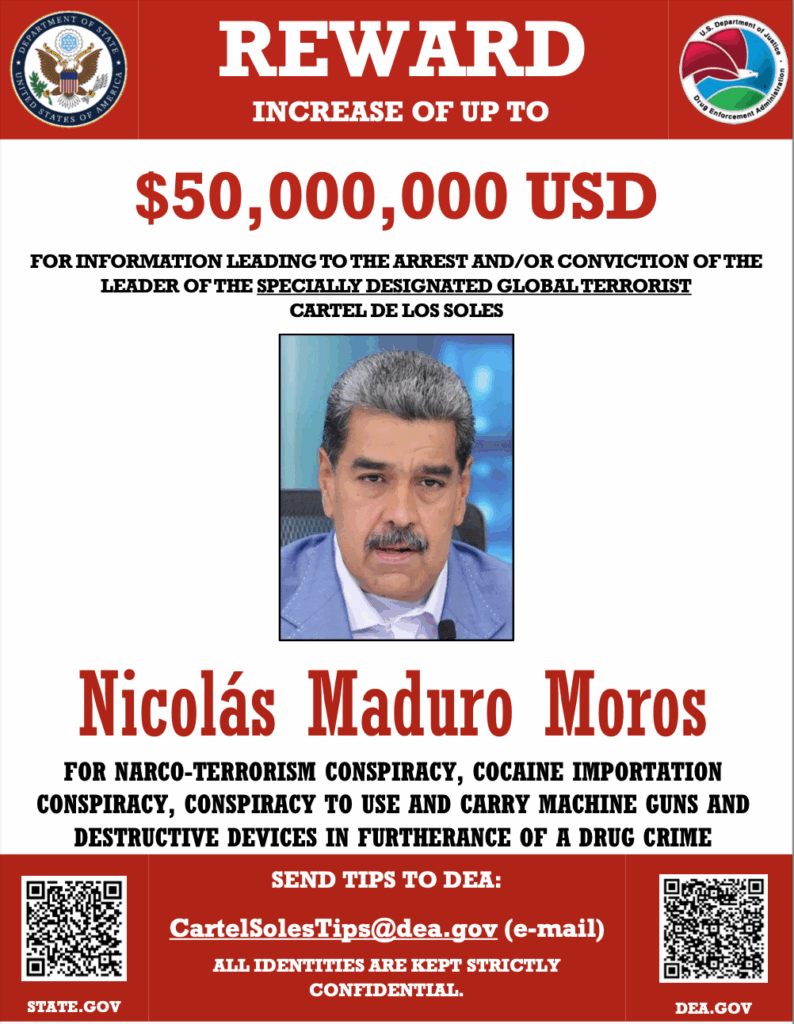
U.S.-Venezuela relations have been strained for decades, more so after the United States refused to acknowledge Maduro’s presidency in 2019 after disputed elections. In a move that recalls the 1989 invasion of Panama, the State Department has put a bounty on President Maduro, who, among other things, is the alleged leader of the narco-terrorist Cartel de los Soles.
Covert Ops and Warships
President Trump has now authorized the CIA to carry out covert operations within Venezuela. The nature of these remains unknown at the moment, but they can be broad-ranging: anything from gathering intelligence to facilitating a potential regime change. It is not the first time the U.S. has intervened abroad on the grounds of illicit drug operations. The Drug Enforcement Administration (DEA) has collaborated with Mexican authorities since the 1970s to address the drug cartel problem.
Still, this is the first time that military intervention has been hinted at.
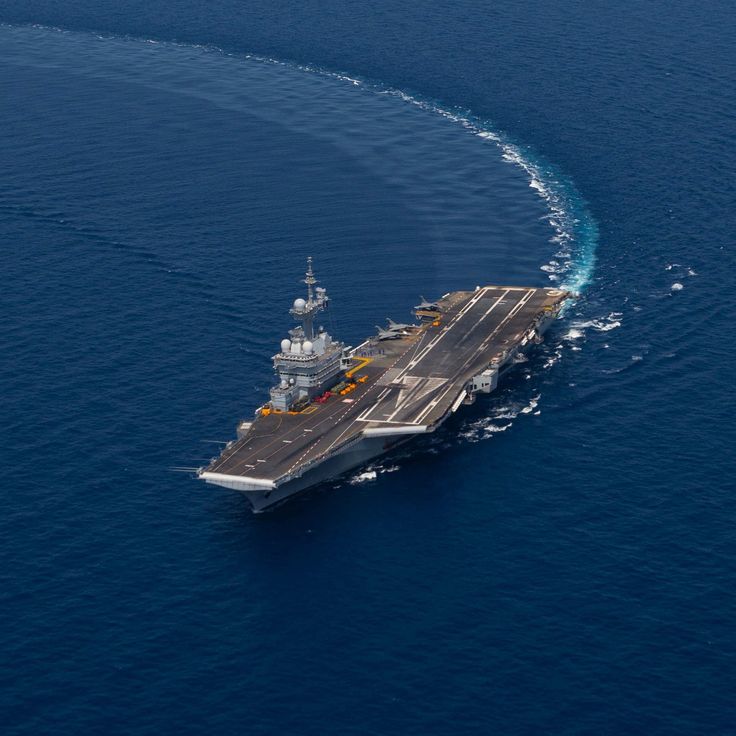
The largest aircraft carrier in the world, the USS Gerald Ford, is set to be parked right on Venezuela’s doorstep later this November. This once again stirred tensions, with President Maduro claiming the United States is fabricating a war.
The Cartel Question
The Trump administration has taken a tough stance on the issue of drug trafficking. Early this year, several cartels and gangs believed to be involved in drug trafficking were designated foreign terrorist organizations (FTOs). Under this designation, the U.S. has more leeway to target and dismantle these organizations.
The approach hasn’t been without criticism. Recently, President Trump declared he would consider carrying out drone strikes within Mexico to target the cartels. Mexico’s Sheinbaum has since rejected any interference, stating instead that she is willing to coordinate and collaborate but will not allow for this kind of action.
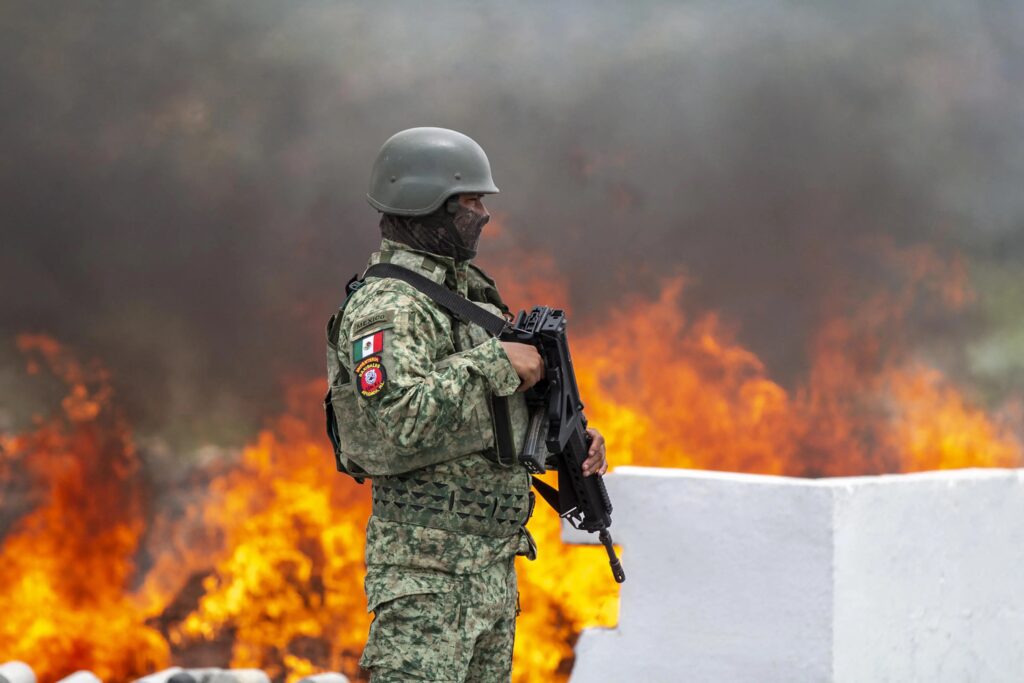
Administration officials stated the president has the authority to call for military action against imminent threats without congressional authorization. One historical example that allowed presidents to do this is the Authorization for Use of Military Force 2001 (AUMF) passed by Congress. It allowed the Bush administration (and subsequent ones) to take military action against al-Qaeda and linked groups — even if they did not pose a direct threat to the United States.
In this case, however, the same AUMF that allowed the U.S. to pursue al-Qaeda and affiliated terrorist organizations does not grant the same authority over these drug cartels. While experts and the Trump administration offer dissonant stances, it is clear that the use of lethal force outside of sustained armed conflict remains a risky zone to navigate.
What’s your take on these rising tensions? Let us know by tagging us @VALLEYMag on X.



It’s really a cool and helpful piece of information. I am glad that you just shared this helpful info with us. Please keep us informed like this. Thanks for sharing.
I’ll immediately grab your rss feed as I can’t find your email subscription link or e-newsletter service. Do you have any? Kindly let me know so that I could subscribe. Thanks.
This web page is really a walk-through for all of the info you wished about this and didn’t know who to ask. Glimpse here, and also you’ll positively uncover it.
I simply could not go away your web site prior to suggesting that I really loved the standard information a person provide on your visitors? Is gonna be back regularly to check out new posts.
I too conceive hence, perfectly written post! .
Those are yours alright! . We at least need to get these people stealing images to start blogging! They probably just did a image search and grabbed them. They look good though!
Those are yours alright! . We at least need to get these people stealing images to start blogging! They probably just did a image search and grabbed them. They look good though!
Fantastic post but I was wondering if you could write a litte more on this subject? I’d be very thankful if you could elaborate a little bit more. Appreciate it!
That is the appropriate weblog for anybody who needs to find out about this topic. You notice so much its nearly onerous to argue with you (not that I actually would need…HaHa). You undoubtedly put a brand new spin on a topic thats been written about for years. Nice stuff, simply nice!
I really enjoy examining on this internet site, it contains great blog posts.