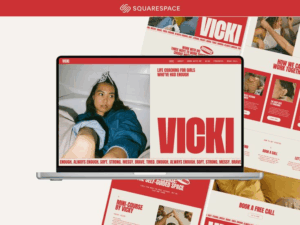
For creatives, a simple resume is no longer going to cut it when you’re on the search for your dream job. Actually, let’s be real, in the job market today, you need one to even land an interview for a position you’d be satisfied with. It’s tough out there, we know.
The first step in making your portfolio is planning. Start by looking through job applications to see what exactly they’re looking for, and think about how you can show them you’ve done it all before. Are they looking to see case studies? Brand partnerships? Writing samples? Make a list of anything and everything companies are looking for and what you are able to show.
It doesn’t have to be published online or presented to anyone — you can make case studies on your own or write up mock articles to prove your writing abilities.
Gather Inspo
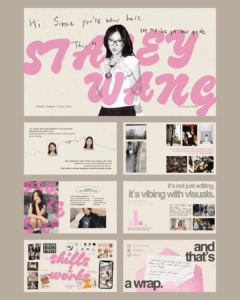
This step can coincide with the planning part — however, it’s worthy of its own section because it’s subjectively the most fun part.
Time to scroll! Search “Portfolio layouts for (insert your career)” on Pinterest and TikTok, and save whatever speaks to you. It is important to create something that is a blend of everything you like — that way, it really is your portfolio.
Build Your Brand
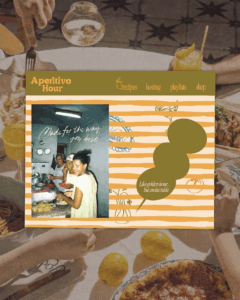
When you think about what you want it to look like, think of yourself as a brand. You are, after all, trying to sell yourself as a strong candidate. What colors are the most you? How would others describe you, and how can you show that through a website?
If you love bright colors, fun graphics and have a big personality, make that come across in your design! If you like things to be structured, organized and have a clean, polished look, then make your portfolio that way.
There are no rules when it comes to the design, you’re the creative director here.
The Foundation
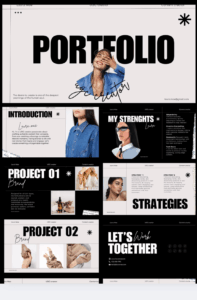
Now that you have an idea of what you want your portfolio to look like … it’s time to build it. There are plenty of sites you can use. A personal favorite of ours is Canva, but feel free to research and use what you like best.
When you build out the layout, make sure to include an introduction page that includes a bit about yourself, what your interests and passions are and your qualifications. This section can include any schooling, certifications and skills you have. Remember to make it visual! Use logos and pictures of the certifications, rather than just listing them out.
Then, move on to your work — the real reason anyone is there. Make this the star of the show. Again — visuals! Anything you can show rather than tell … do it. Take inspiration from what you’ve found in your research and showcase your work in a fun, creative way that feels like you. The options are endless in terms of presentation.
Once you’ve built that out, make sure to include a contact info section at the bottom of each page of your site. This way, when people are scrolling through a section, they’re more inclined to just easily click on your contact info rather than having to go to a separate page on the site. A good rule of thumb is to include your email and LinkedIn profile, but you can always add more if you please!
It’s All In The Details
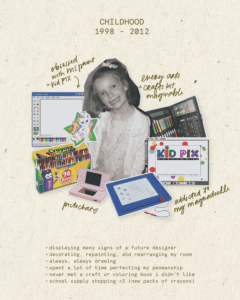
After you’ve built the foundation and layout of your portfolio, it’s time to add the details. You can pull graphics from Pinterest or ones you make yourself in order to bring your site to life. This is where your skills and personality shine — it’s where you make your portfolio stand out from all the rest. Maybe you make an interactive section that pulls together all your interests, or a page dedicated to reviewing each movie you watch. It can be anything! Go through each of the pages and add a little commentary on your work.
Make it seem like you’re having a conversation with whoever is going through your site. A portfolio not only shows off your work, but also gives the person a small introduction to you as a person. You want to make the reviewer want to learn more and talk to you face-to-face.
Once you feel ready and satisfied with the site, it’s time to publish it! Convert your draft into a website and share the link. Certainly, post it on LinkedIn, but also include it in any introduction emails to people, link it on your resume and attach it to any job application that asks for a site. Also, make sure you are consistently updating your portfolio as you do more work.
The search for a job or internship is hard, there is no doubt about it. However, having something you built on your own to show what you’ve accomplished already has you ahead in a pool of thousands. So, get creating!
For more professional development advice and inspiration, check out our LinkedIn @VALLEY Magazine!




I conceive you have observed some very interesting points, thankyou for the post.
Appreciate the detail here. It’s obvious you put thought into making this accessible without oversimplifying. Bookmarked.
Utterly pent subject matter, thankyou for selective information.