
We all love a good storyteller. Watching your favorite movie or reading your favorite book, the first-person perspective from which the viewer learns about the narrator, the people around them and the little details that they observe from memory — you tend to rely on this being the truth. Maybe, though, not every story is the true reflection of reality. When conjuring up details about something from memory, you’re bound to miss out on some things.
What if, though, the greatest unreliable narrator in your life is … you?
What is an Unreliable Narrator?
In storytelling, an unreliable narrator is someone whose credibility has been seriously compromised. Their version of events just can’t be fully trusted. Whether it’s because they’re lying, deluded or simply incapable of seeing the full picture, writers use this device to create suspense, emotional depth and sometimes shocking reveals and twists in the story. Of course, readers or viewers eat it up every single time.
Think of classics like “The Catcher in the Rye” by J.D. Salinger or movies like “Fight Club”. Even shows like “Mr. Robot” and “The Sopranos” challenge viewers to constantly question what’s true. Where the intricacies of the unreliable narrator lie is in them forcing you to experience their world through a fractured, human lens. It’s messy, it’s emotional, it’s definitely biased and it’s ultimately, flawed.
The Unreliable Narrator of Our Lives
Surprise: it’s ourselves.
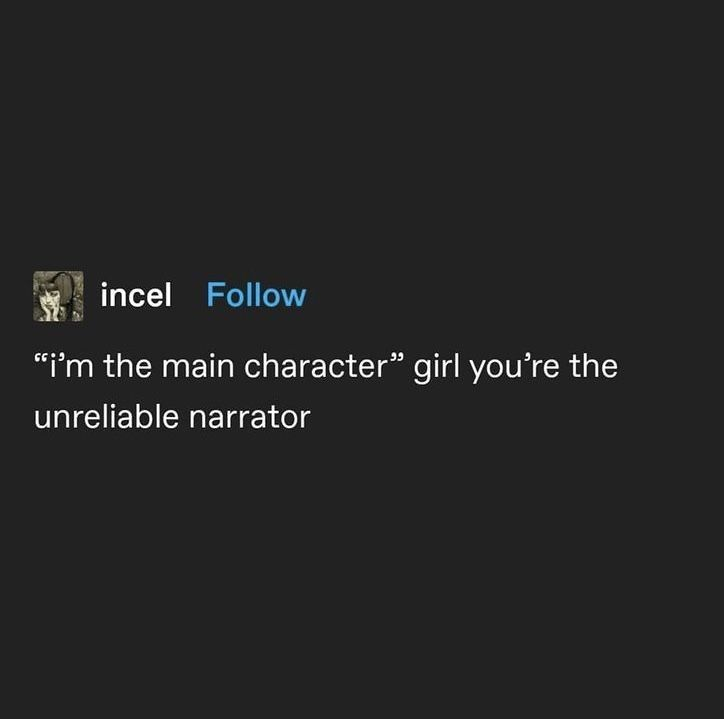
Every day, we narrate our own lives in our heads. We tell ourselves why things happen, what people mean, who we are. Still, just like the unreliable narrators of the books or movies or TV shows that we watch, we’re subject to biases and blind spots that are driven by emotion or a lack of judgement. We build explanations that protect our egos; ones that preserve our beliefs or simply make the world feel a little more manageable.
Sometimes, those truths we tell ourselves are wrong.
When Do We Skew Our Reality?
It happens a lot more often than we think. We break up with a partner and while it’s definitely possible that they were … you know, terrible to us, sometimes in order to cope we can rewrite history in our minds to make the other person seem cruel or ourselves absolved of blame. We fail an interview and suddenly, we’re telling ourselves, “I never wanted that job anyway.” An argument with someone and we find ourselves clinging to our version of events, even if our rational voice might tell us otherwise.
We don’t skew reality because we’re malicious in any way, though. Sometimes, it’s just easier to live with a comforting story than not. Being human also just comes with being able to see the world only from our own point of view — unless we actively try to step outside it. Sometimes, the truth is found in the spaces between multiple perspectives instead of wedged between our own mental reality. Listening to someone else’s experience, considering facts that challenge our beliefs, or even doing something as simple as asking ourselves “What if I’m wrong?” can open up your mind to more truths.
It’s uncomfortable. Humility becomes a base requirement. But it can be done.
Self-Deception vs Self-Reflection

When self-deception goes unchecked, though, it can leave us trapped in loops. Stuck repeating mistakes, feeling misunderstood and blaming others without ever even giving ourselves the chance to grow.
The antidote? Self-reflection. Think of it like … editing your own story. You have the first draft, the one that you’ve panned out in your mind and you’re pretty convinced it’s good. Then, you begrudgingly give it another go. That’s when you question your assumptions and allow for complexity — maybe the relationship failed because both people made mistakes. Maybe that failure was devastating because we truly did want it. Maybe the other person’s viewpoint holds truth, too.
Are you the unreliable narrator of your own story? Let us know what you think @VALLEYmag on Instagram or X (formerly Twitter)!






I do believe all the ideas you’ve presented to your post. They’re very convincing and can definitely work. Still, the posts are very brief for beginners. May just you please prolong them a little from next time? Thanks for the post.
Good day! Do you use Twitter? I’d like to follow you if that would be ok. I’m undoubtedly enjoying your blog and look forward to new posts.
But wanna input that you have a very decent internet site, I enjoy the style it actually stands out.
Merely wanna remark that you have a very nice internet site, I enjoy the style and design it actually stands out.
Appreciate it for helping out, great information.
Hey very cool site!! Man .. Excellent .. Wonderful .. I’ll bookmark your web site and take the feeds additionallyKI’m glad to find so many useful info here within the put up, we’d like develop extra strategies in this regard, thanks for sharing. . . . . .
I truly appreciate this post. I have been looking everywhere for this! Thank goodness I found it on Bing. You’ve made my day! Thanks again!
I am so happy to read this. This is the type of manual that needs to be given and not the random misinformation that is at the other blogs. Appreciate your sharing this best doc.
A person essentially help to make seriously posts I would state. This is the very first time I frequented your website page and thus far? I amazed with the research you made to make this particular publish amazing. Fantastic job!
Hi, i believe that i saw you visited my site thus i got here to “return the prefer”.I’m attempting to to find issues to improve my web site!I suppose its ok to make use of some of your ideas!!