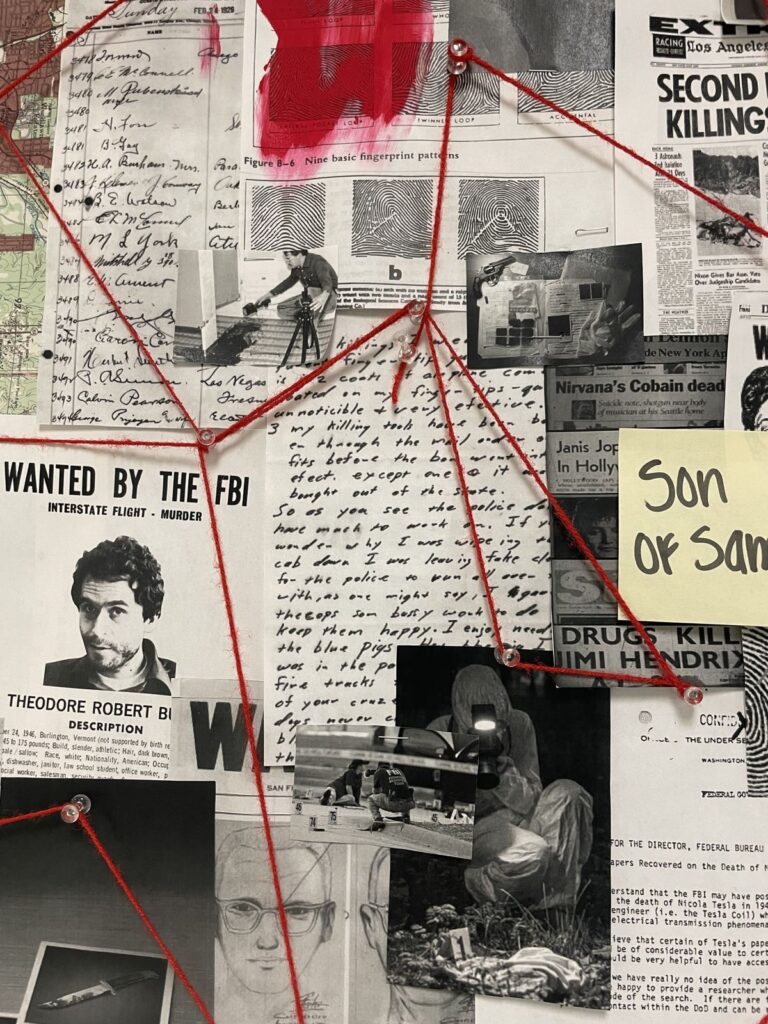
Society’s fascination with true crime has continued to prevail, especially as retellings continue to find their way onto the mainstream media. Retellings of horrific murders or inexplicable disappearances will always have an audience eager to know more.
As we continue to watch these mini-series and documentaries we are more keen to ask ourselves what persuaded someone to do what they did, rather than asking ourselves what brought us to find entertainment from such nightmarish acts in the first place.

You’ve Most Definitely Seen…
In understanding our own involvement in the desensitization of crime, it’s important to note the larger game at hand. Though not necessarily clear, it’s certainly insinuated that Hollywood has thrived from its “shock factor.” Sometimes directors are tasked with pushing the limits, seeing just how much they can get away with before losing all senses of humanity.
Franchises like “Scream,” “Insidious” and “The Conjuring,” get away with their fictitious plots and are able to desensitize crime and murders because of the unbelievability of the rest of the world these plots take place in. Yet, films and mini-series that are based on real-life events like those within the “Monster” franchise on Netflix or “The Act” on Hulu are all the more believable, simply because they are true.
When consuming these forms of media it becomes all the more difficult to separate the fictitious from the true. In the eyes of the audience, both take on the similar role of entertainment.

Finding Satisfaction in the Inexplicable
The age old question is, what draws us to find satisfaction in the inexplicable? Some may say they watch true crime documentaries to reach a better understanding of human psychology, searching for the why in the unfathomable. Others simply find the plots themselves to be intriguing — the aspect of “reality” never crossing their mind.
Yet, can it be safe to say that the majority of those of us sitting on our couches, huddled underneath our warm blankets in our quiet homes, find satisfaction in knowing that our own lives must be better, must be more successful, simply because we can never see ourselves being on the same side of evil each of these stories portray.
In reflecting on the romanticization of true crime, we are reducing the sensationalist spotlight that is so often cast on these very real events. The victims are no longer characters in a plot, the criminals are not just faces for our hear me out cakes and, most significantly, crime itself is not just a storyline for our favorite TV shows, but an unavoidable portion of reality.
What are your thoughts on the portrayal of true crime in film, TV and the media? Tag @VALLEYMag on Instagram to share your thoughts!