

Hello there! Did you just hear that in your head? If so, this means you have an internal monologue or “inner voice” — a common phenomenon that “causes you to ‘hear’ yourself talk in your head without actually speaking or forming sounds,” according to Healthline.
Psychology professor Russell Hurlburt estimates 30 to 50 percent of people have an inner monologue narrating their thoughts throughout the day. But if you don’t have one, Hurlburt, who teaches at the University of Nevada, Las Vegas, says not to worry.
“I’m confident that inner speech is a robust phenomenon; if you use a proper method, there’s little doubt about whether or not inner speech is occurring at any given moment,” writes Hurlburt in the media organization Psychology Today. “And I’m confident about the individual differences—some people talk to themselves a lot, some never, some occasionally.”
So, what exactly is inner speech? How diverse are our ways of thinking? Here’s VALLEY’s investigation of the matter.
Inner Versus No Monologue
Despite psychologists debating this topic since the 1930s, the concept of an inner monologue became part of public discourse after a viral tweet in January 2020.
Many on both sides were surprised as they contemplated what life is like with or without an internal dialogue.
Often called “the voice inside your head,” inner monologue or “self-talk” is partially caused by corollary discharge — a brain signal that helps us distinguish between external and internal stimuli. This also explains why our voices sound different on video as opposed to when we speak aloud.
Helene Brenner, psychologist and creator of the My Inner Voice app, says different parts of the brain are tapped into to generate inner speech.
“Inner speech is the product of the default mode network or DMN of the brain,”Brenner said in an article for media company Well + Good. “It’s a network of different areas of the brain that become very active, all together, when we’re not engaged in doing anything task-oriented—when we’re just thinking or daydreaming. It turns out it never fully stops either—it just gets suppressed and more actively engaged we get.”

This habit is said to begin in childhood. As we develop language skills, we simultaneously learn to internalize commentary, and in adulthood, this helps us with memory and completing daily tasks. However, everyone experiences corollary discharge to a certain extent — no matter if they hear an inner voice or not.
It is normal to have, not, or occasionally have internal dialogue as it is particular to your auditory system and how you intercept and comprehend speech. Those who do not have an ongoing narration often rely on visual imagery when laying out their thought process.
For example, if milk was needed from the grocery store, people with an internal monologue would think to themselves: “I need to get some milk today,” whereas those without would imagine purchasing the milk. Some use a combination of both methods.
Pros and Cons
A 2018 study found that internal dialogue can contribute to self-motivation, behavior, performance, judgment and criticism. Other benefits include enhanced problem-solving, self-reflection, productivity and critical thinking skills, along with increased resilience against setbacks and lower stress levels.
In contrast, critical inner voices negatively affect self-esteem and confidence.
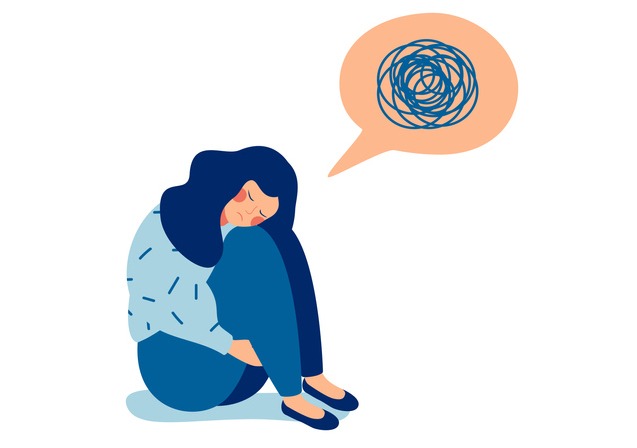
“The default mode network is what produces that whole running narrative in your head—all the things you think about, connecting your past to your present and thinking about the future, all of your opinions and self-comparisons,”Brenner said. “It’s the seat of creativity and imagination, but it’s also the seat of neurosis, depression and anxiety.”
According to the non-profit PsychAlive, critical internal dialogue stems from early life experiences. Oftentimes, negative memories with parents, siblings, peers and adults influence how we see and think about ourselves. It affects multiple aspects of our lives — relationships, performance in school, work and mental health. Common examples of this thought pattern range from “You’re not good enough,” “You’re unattractive” to “You’ll never be successful.”
Combatting critical thoughts
Critical inner voices can occur at different times for everyone. Engaging in positive self-talk can help curtail these patterns, however. If you notice yourself thinking negatively of your work, worth or anything, you may tell yourself “I am worthy” and “I can do this.”

Healthline advises trying guided meditation. It can help increase awareness regarding how negative thoughts occur and allow you to observe your emotions, providing a greater perspective to challenge your inner critic. Journaling can also aid in seeing your thoughts as they come in, allowing you to pinpoint negativity as we aren’t always aware of when it’s happening.
It is also important to know when to talk to a professional. Inner monologues are normal, but if negative thoughts are persistent — affecting your daily life and functioning — it is always best to reach out to a therapist to ensure the best possible help.
University Counseling Psychological Services (CAPS) can be contacted at (814)-863-0395 or through their website. The National Suicide Prevention Lifeline can be contacted at (800)-273-8255.






This post was super interesting! I never really thought about how my inner monologue influences my thoughts and actions. I love the idea of exploring different ways our minds work. I’m definitely going to pay more attention to my inner voice now. Thanks for sharing!
This post really resonated with me! I’ve always been curious about how others experience their inner thoughts. It’s fascinating to think about how our internal dialogues shape our perspectives and decision-making. Thanks for shedding light on such an intriguing topic!
I never really thought about my inner monologue until reading this! It’s fascinating to see how it varies from person to person. I realized mine is constantly analyzing everything. What an interesting perspective on self-awareness!
I found this post really intriguing! I’ve always been curious about how people experience their inner monologues differently. It’s fascinating to think about how much that affects our thoughts and decision-making. Thanks for exploring this topic!
I found this post really intriguing! I’ve always been curious about how different people experience their thoughts. It was fascinating to learn about the spectrum of inner monologue experiences. I definitely fall into the “constant chatter” category, and sometimes I wonder how others think. Thanks for shedding light on this topic!
Really appreciate how much effort you put into creating this valuable content
Das war wirklich eine große Hilfe
Super Idee, wirklich beeindruckend. Das sollten mehr Leute sehen
I found this post really interesting! I’ve always been curious about how different people experience their thoughts. It’s fascinating to learn that some people have a constant inner monologue while others think in images or emotions. It definitely made me reflect on my own thinking style! Thanks for sharing these insights!
Nice blog.